What the pause might represent
Shaders are programs used in rendering. Preparing them for the current graphics environment can take time, and work that happens during play can interrupt frame delivery. A game may instead prepare some shaders before you enter a level. Let an explicit compilation stage finish; skipping it can move the waiting into the session rather than remove it.
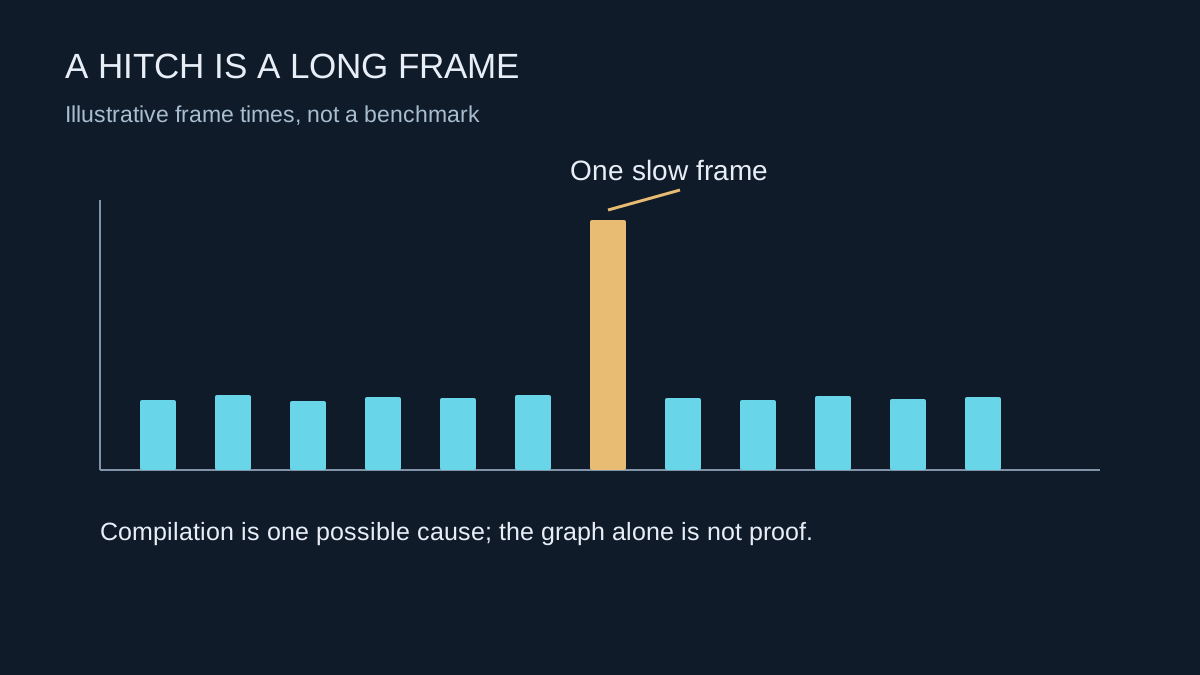
A common clue is a hitch the first time an effect or area appears, followed by a smoother repeat. That pattern is useful evidence, not a definitive diagnosis. Asset loading, background activity and other engine work can produce similar symptoms. Lowering resolution may help a GPU-heavy scene while doing little for a pause caused by preparation elsewhere.
Make the comparison fair
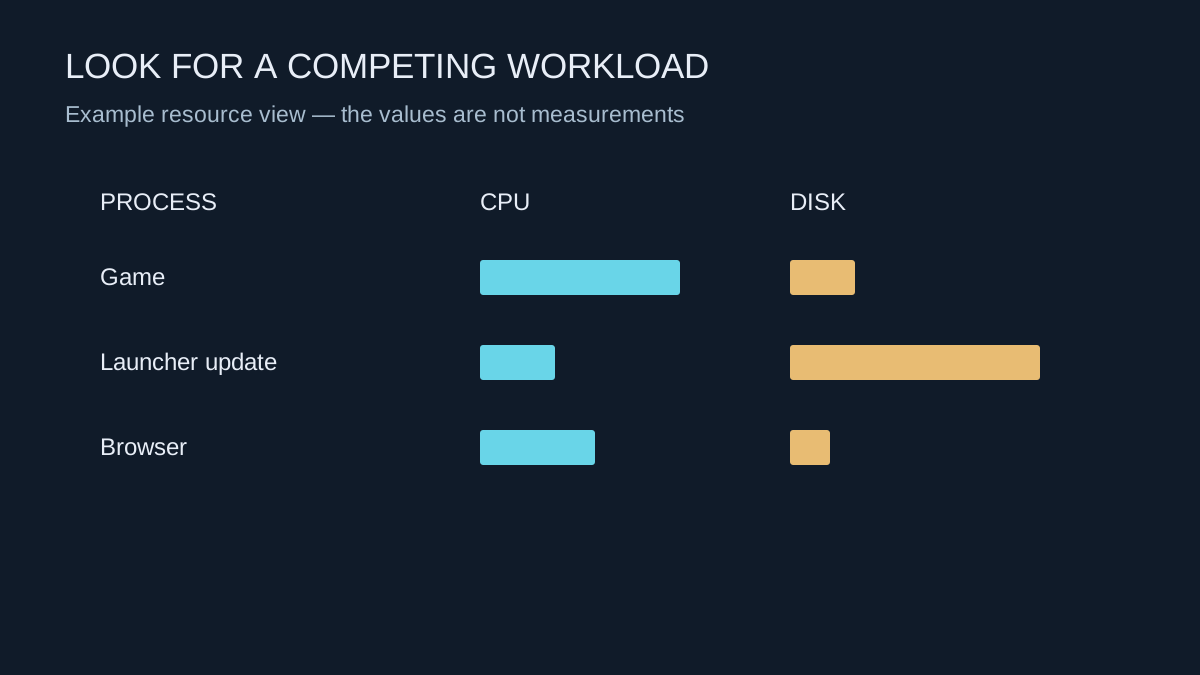
Use the same save and repeat the same short route. Record whether this is the first run after a game or driver update. Watch frame delivery as well as average frames per second: a brief long frame can be very noticeable even when the average looks healthy. Keep downloads and other changing workloads out of the comparison.
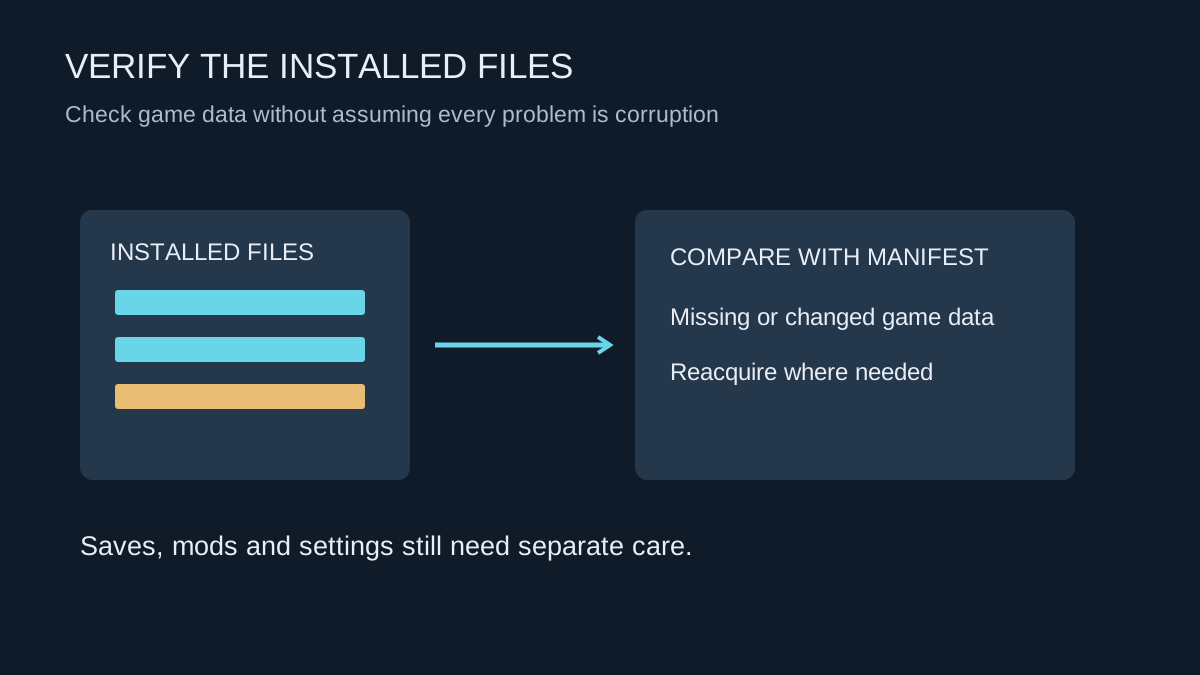
Do not repeatedly clear caches as a general performance ritual. Removing prepared data can require it to be built again. Follow a game's troubleshooting instructions if a damaged cache is suspected, and expect the next launch to behave differently while it rebuilds. A cache reset should have a reason and an observed result.
Know what a setting can actually fix
Check the game's current patch notes for acknowledged stutter and preparation changes. Some problems need a developer update; they are not evidence that the computer requires a new graphics card. Likewise, a setting that controls texture quality is not necessarily a shader-compilation switch.
If repeated passes hitch at the same point, broaden the investigation. Check storage activity, memory pressure and temperature-related performance changes. If the pause happens only when joining an online match, separate connection delays from local rendering. Send support a short description of the repeatable route, software versions and whether the behaviour improves on a second pass. That evidence is more useful than saying only that the game feels laggy.